NonFinito
Nonfinito (2025)
Artport, Tel Aviv
artists-in-residence group exhibition
Curator: Vardit Gross
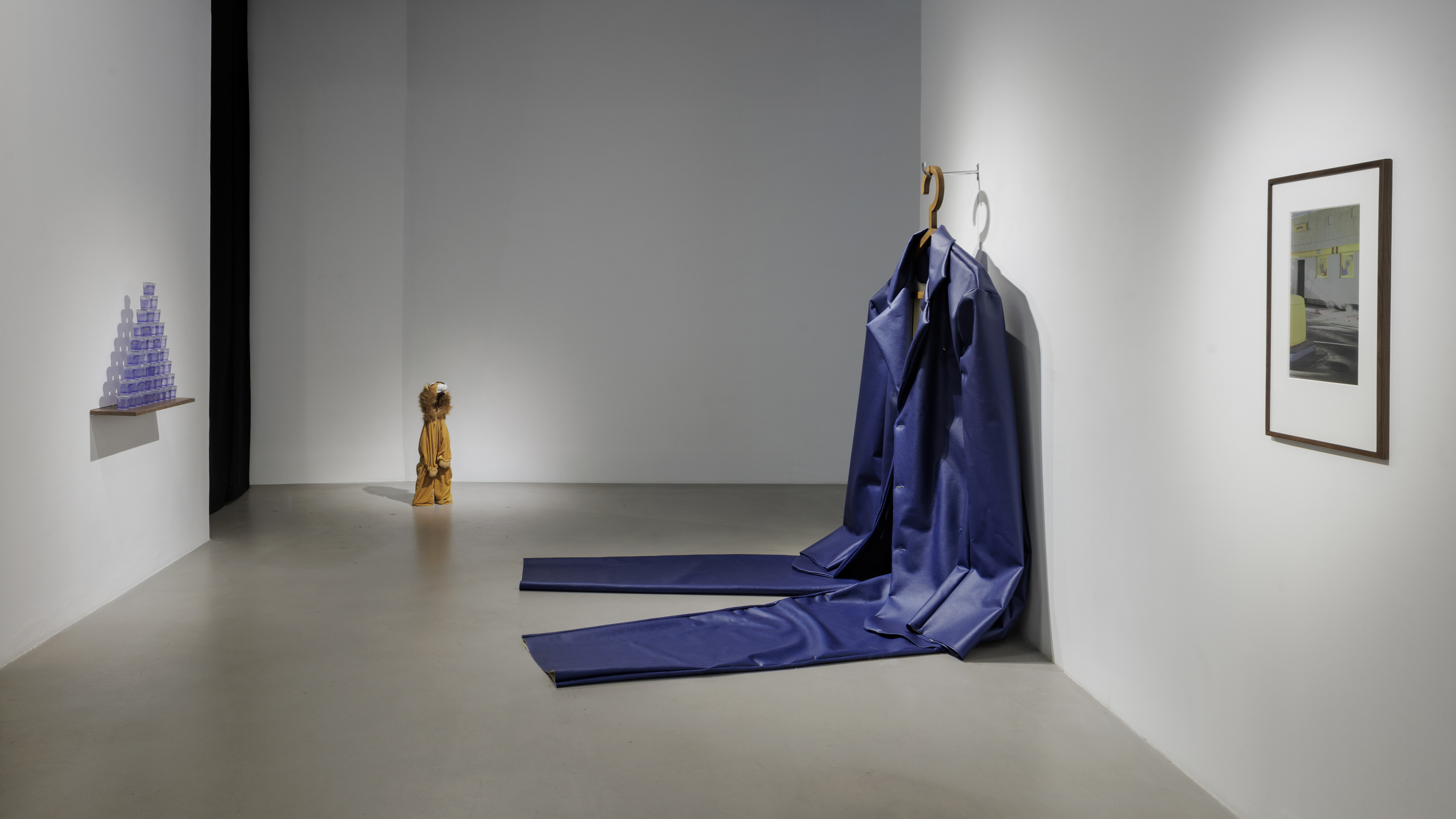
In the body of work I presented in the exhibition, I focused on materials collected in south Tel Aviv, in the immediate surroundings of Artport. Daily walks through the neighborhood became a ritual of collecting, editing, and marking. Along the way, fragments of economy, culture, and urban routine accumulated objects charged with human gestures and traces of repeated use.
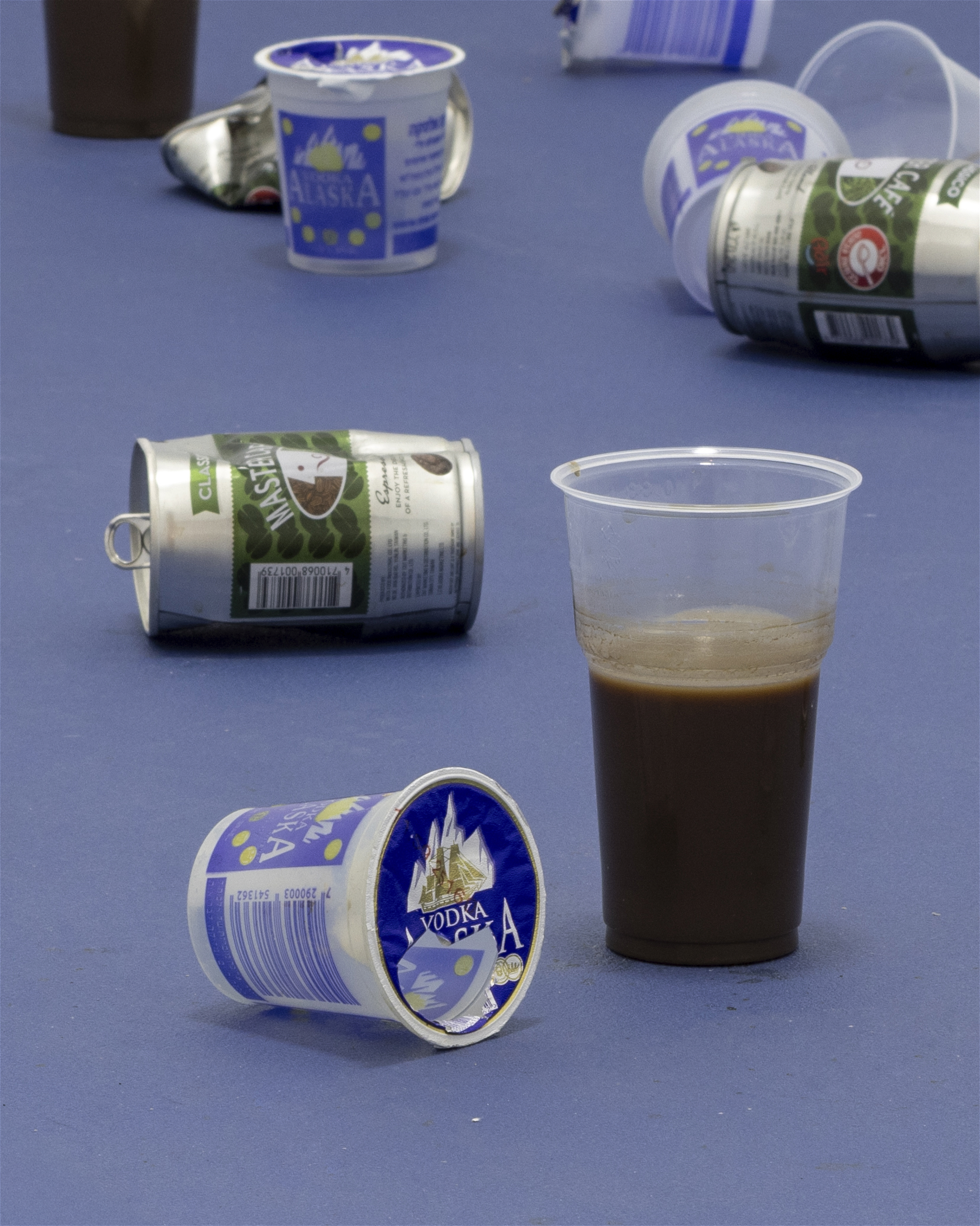
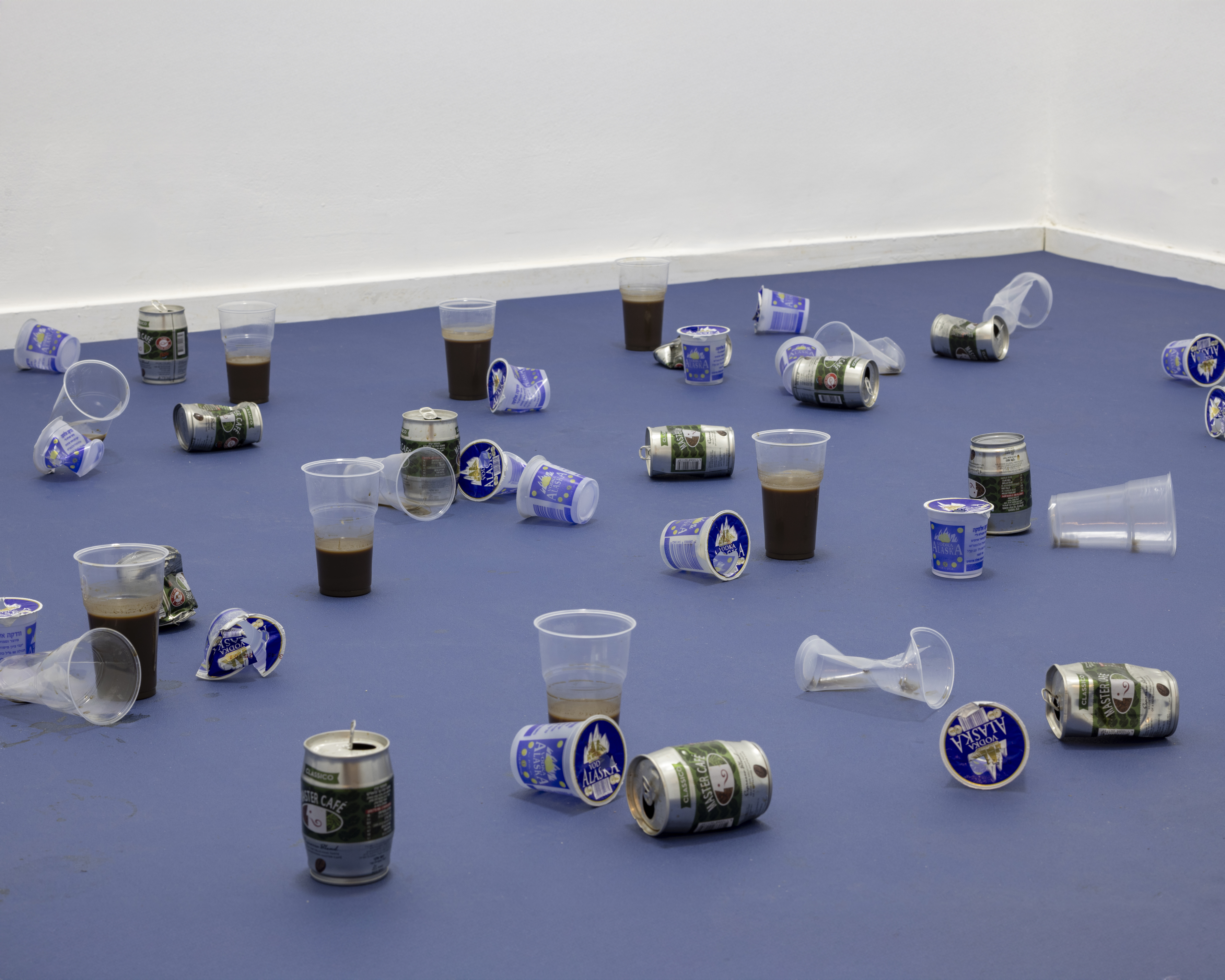
Near a food distribution point for people experiencing homelessness, disposable “Alaska Vodka” cups were gathered and stacked into a tower of promises. Combined with “Master Coffee” cans, they formed an “Espresso Martini” a south Tel Aviv version of a familiar cocktail. A child’s lion costume, found discarded on the street, was mounted on two microphone stands, emphasizing the fragility of the figure, the body, and the position of the artist. In The Politician, an oversized suit sewn from blue linoleum a material commonly associated with industrial and public flooring appears to have lost its strength and collapsed onto the floor.
These remnants of consumption do not enter the exhibition space as waste, but as active collaborators in the work. They carry traces of use, exhaustion, and promise, becoming an echo of the urban environment and of everyday human actions.
Installation views by Tal Nisim
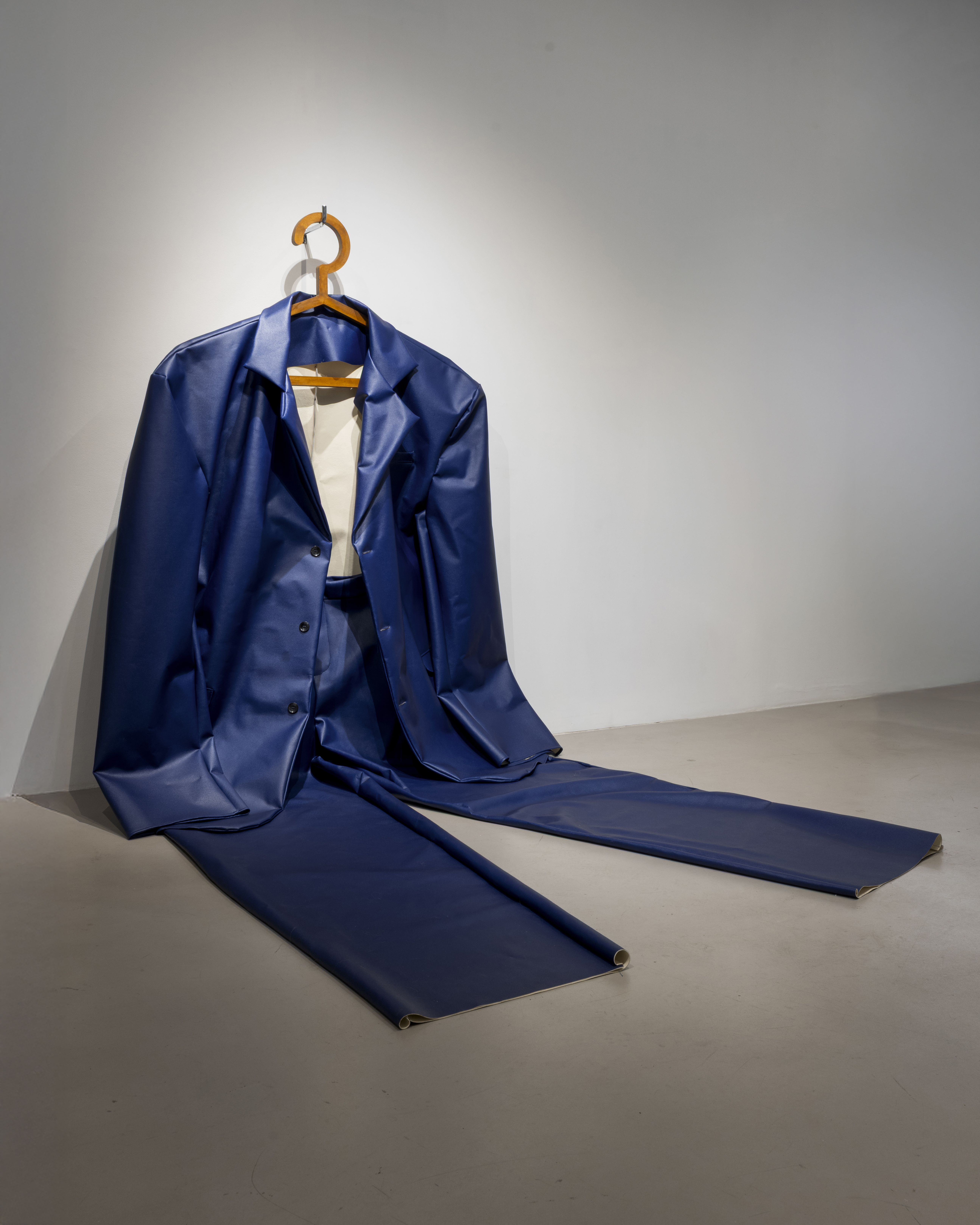
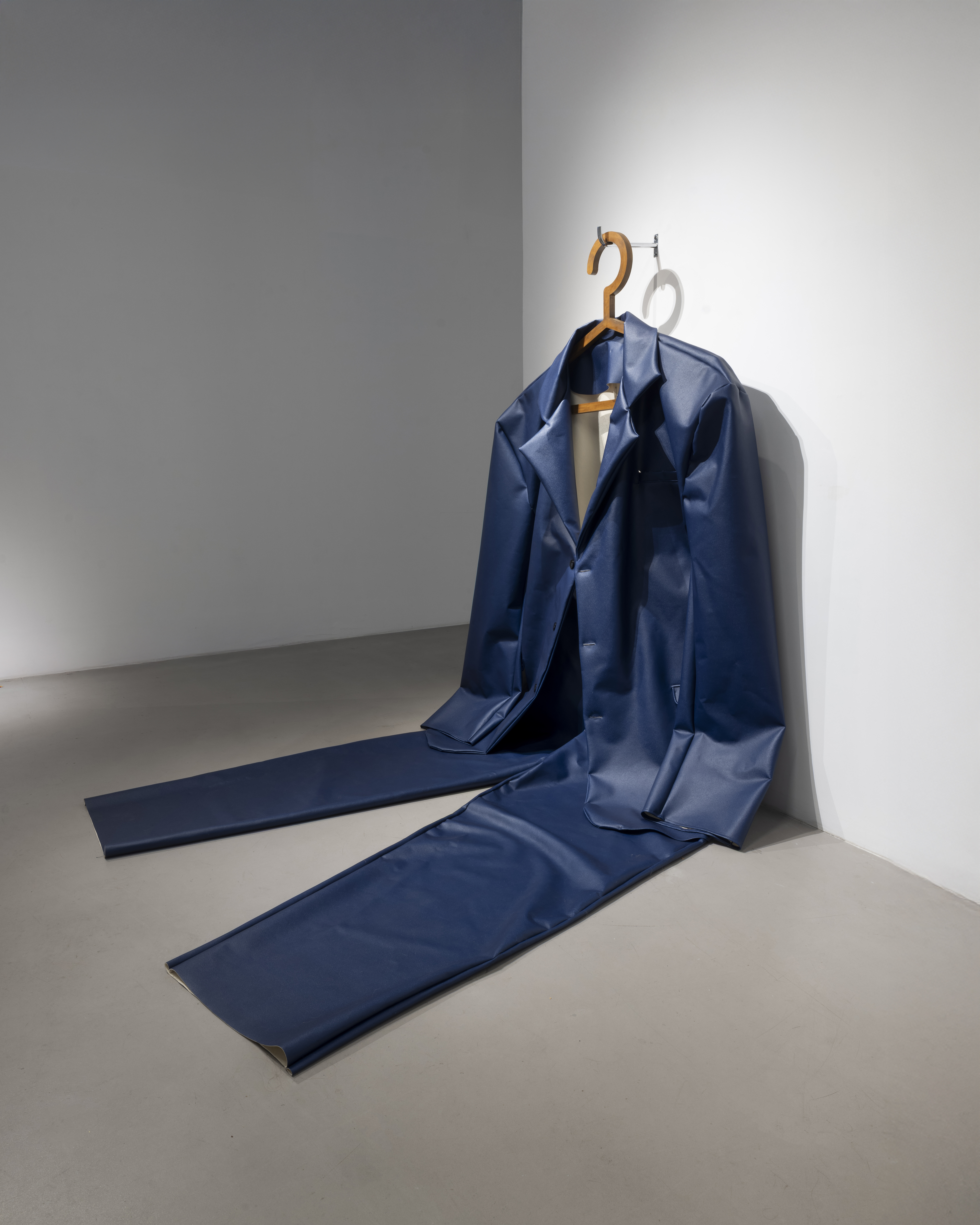
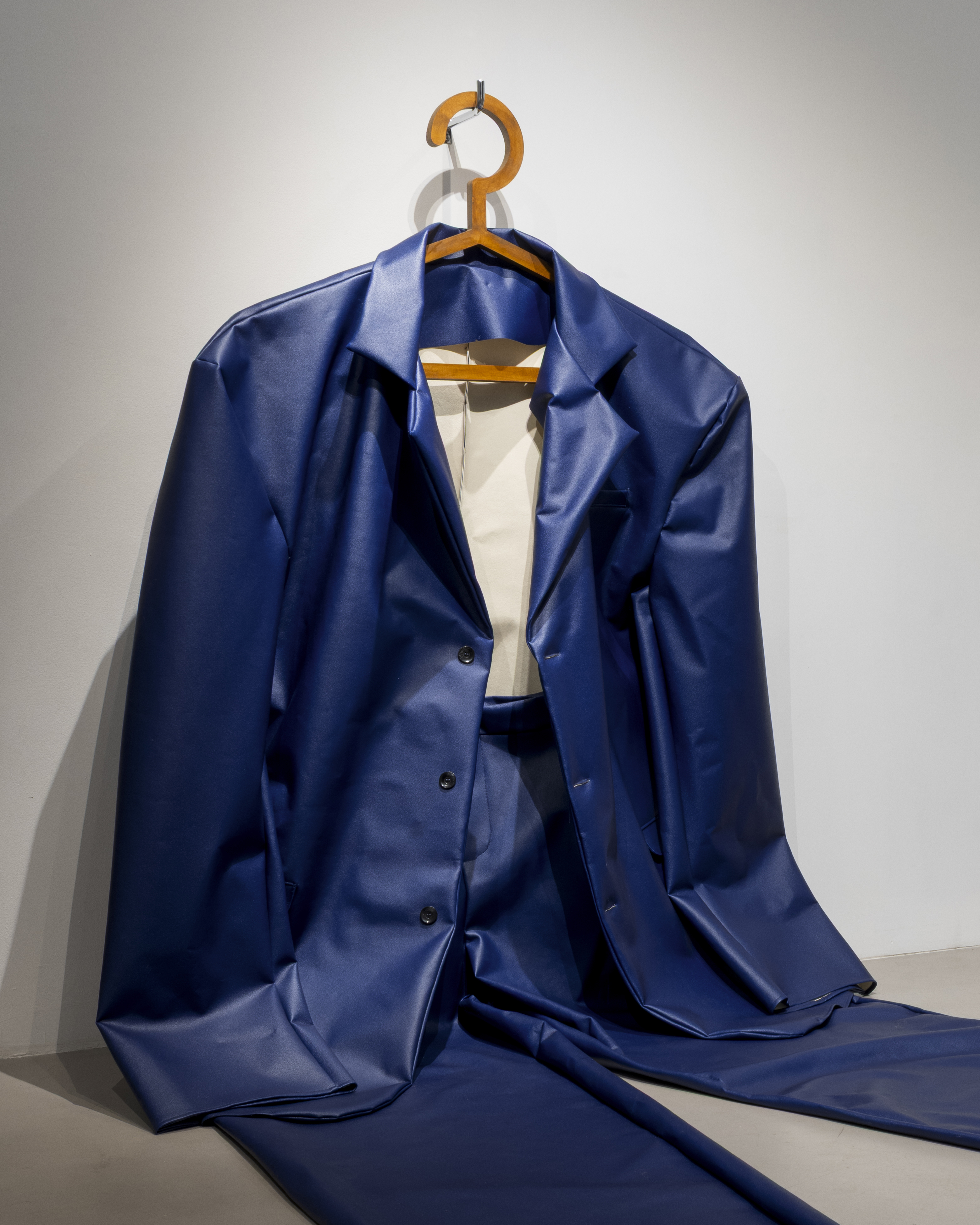
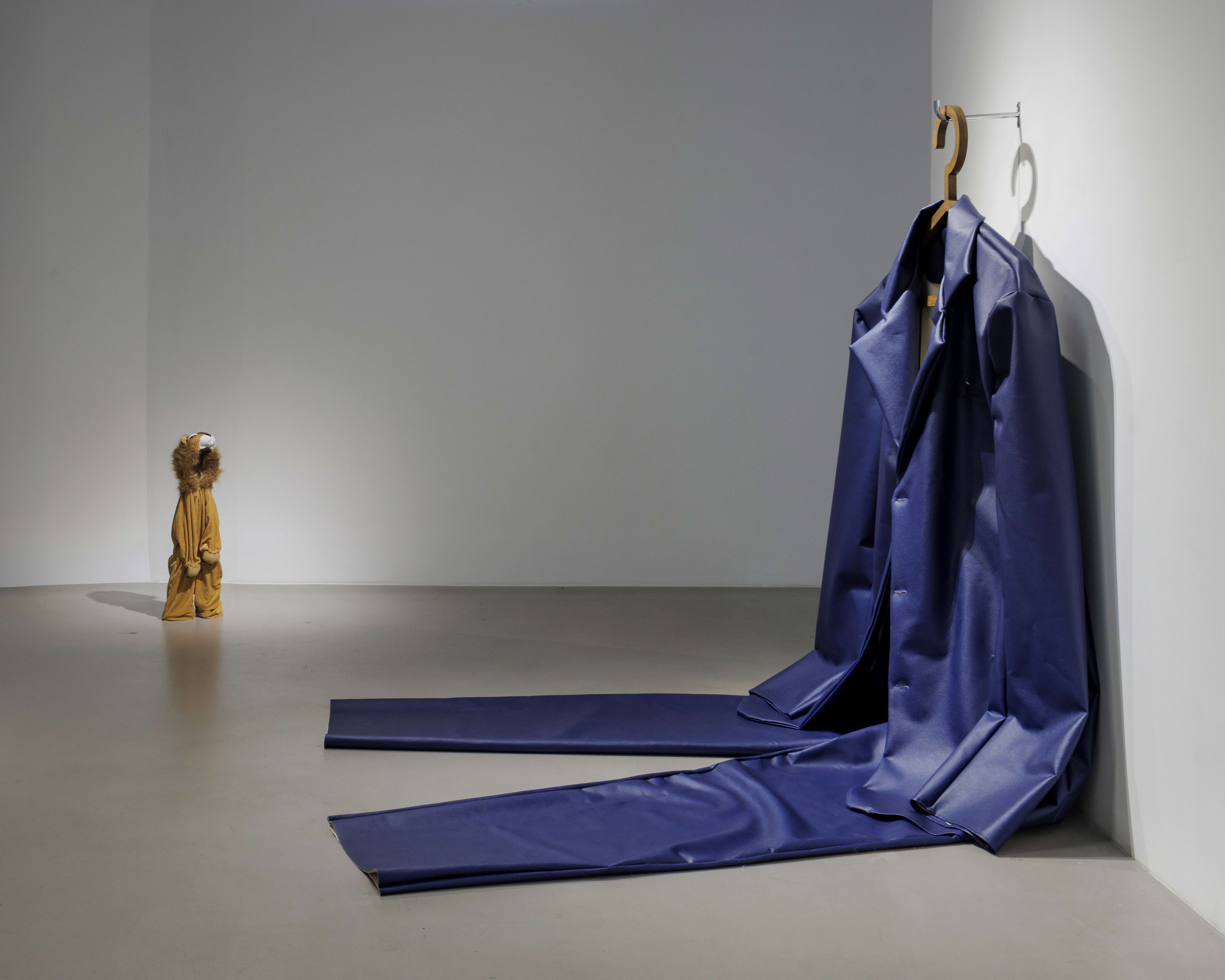
Politician, 2025
Linoleum, plywood
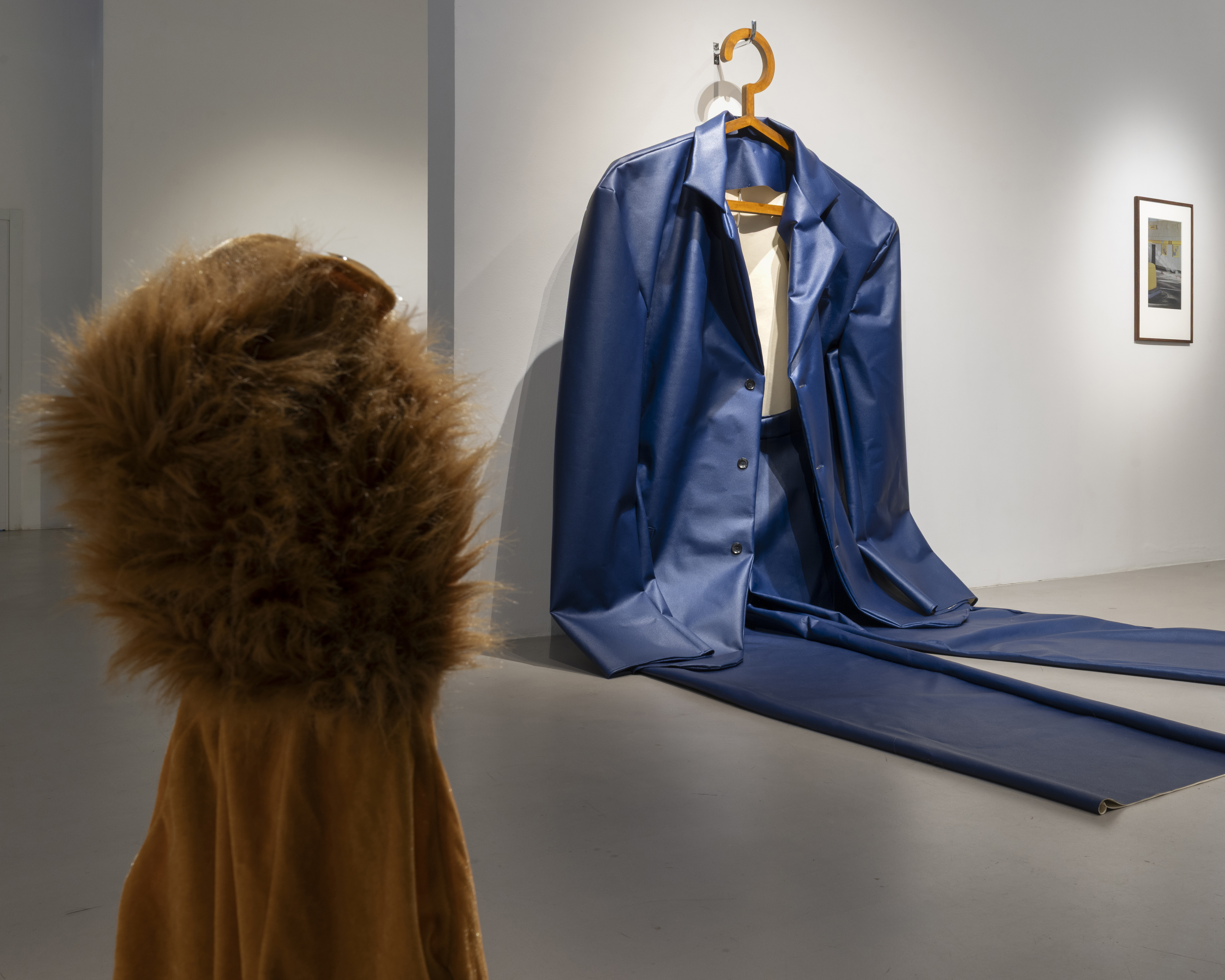
Politician is an oversized suit made of dark blue linoleum. The garment is sewn from a material familiar from floor tiles and public spaces: industrial, durable, inexpensive, and never meant to touch the body. Its use replaces the softness and flexibility of fabric with a rigid, glossy surface that simulates presence while simultaneously erasing it.
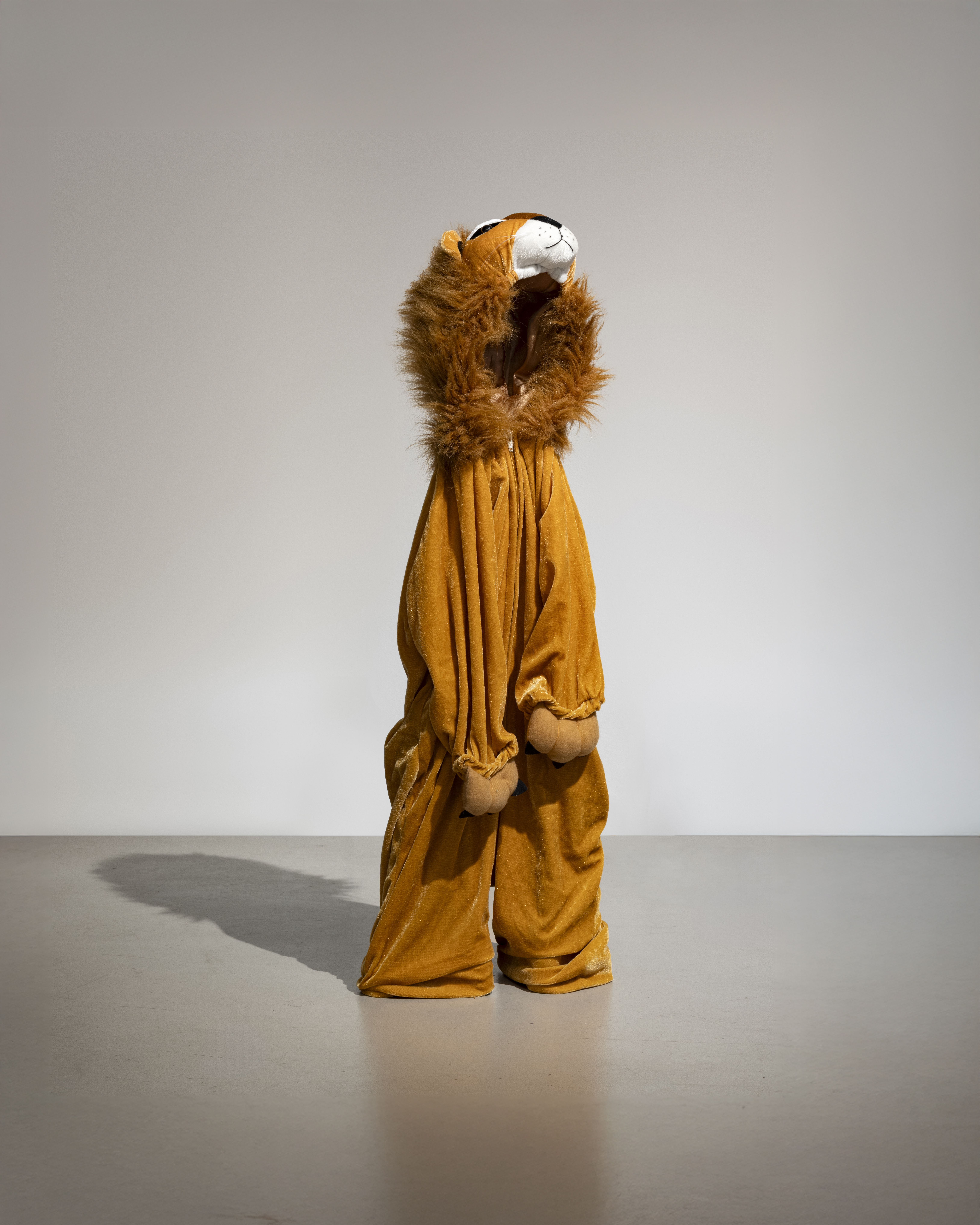
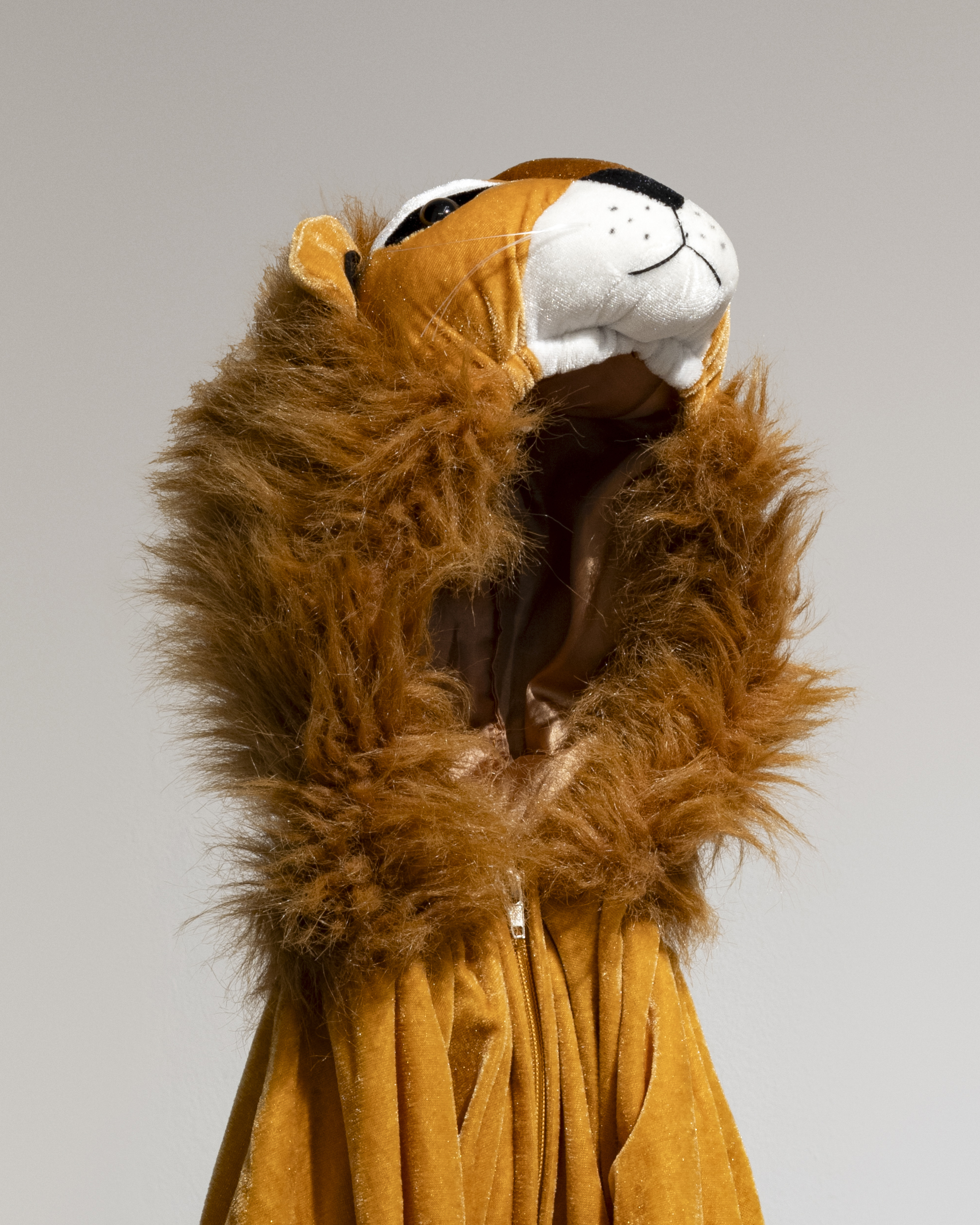
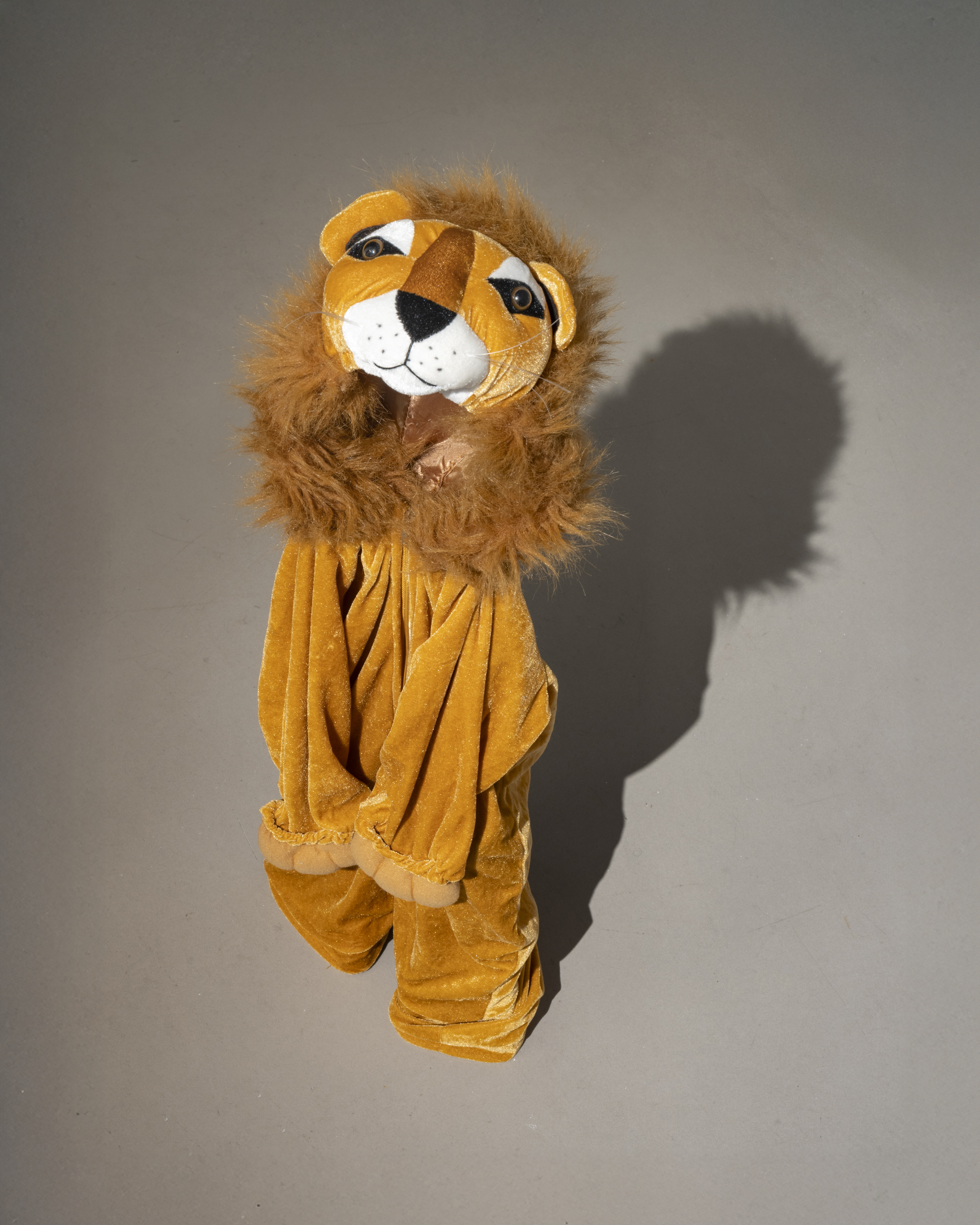
 Esau, 2025
Child’s lion costume, microphone stands, steel wire
Esau presents an empty lion costume, standing o the floor like an abandoned body. The garment remains as a shell only. The lion, a symbol of courage and confidence, is rendered immaterial, shedding its meaning the moment the child is absent. The missing human body becomes the work’s focal point: the costume holds a memory of warmth and movement, yet stands as a silent witness to an identity that has slipped away. Like the biblical Esau, a figure wrapped in skin whose outward appearance becomes a site of impersonation, the work exposes the tension between inside and outside, between what is worn and what is left behind.
Alaska, 2025
Alaska vodka cups, wooden shelf
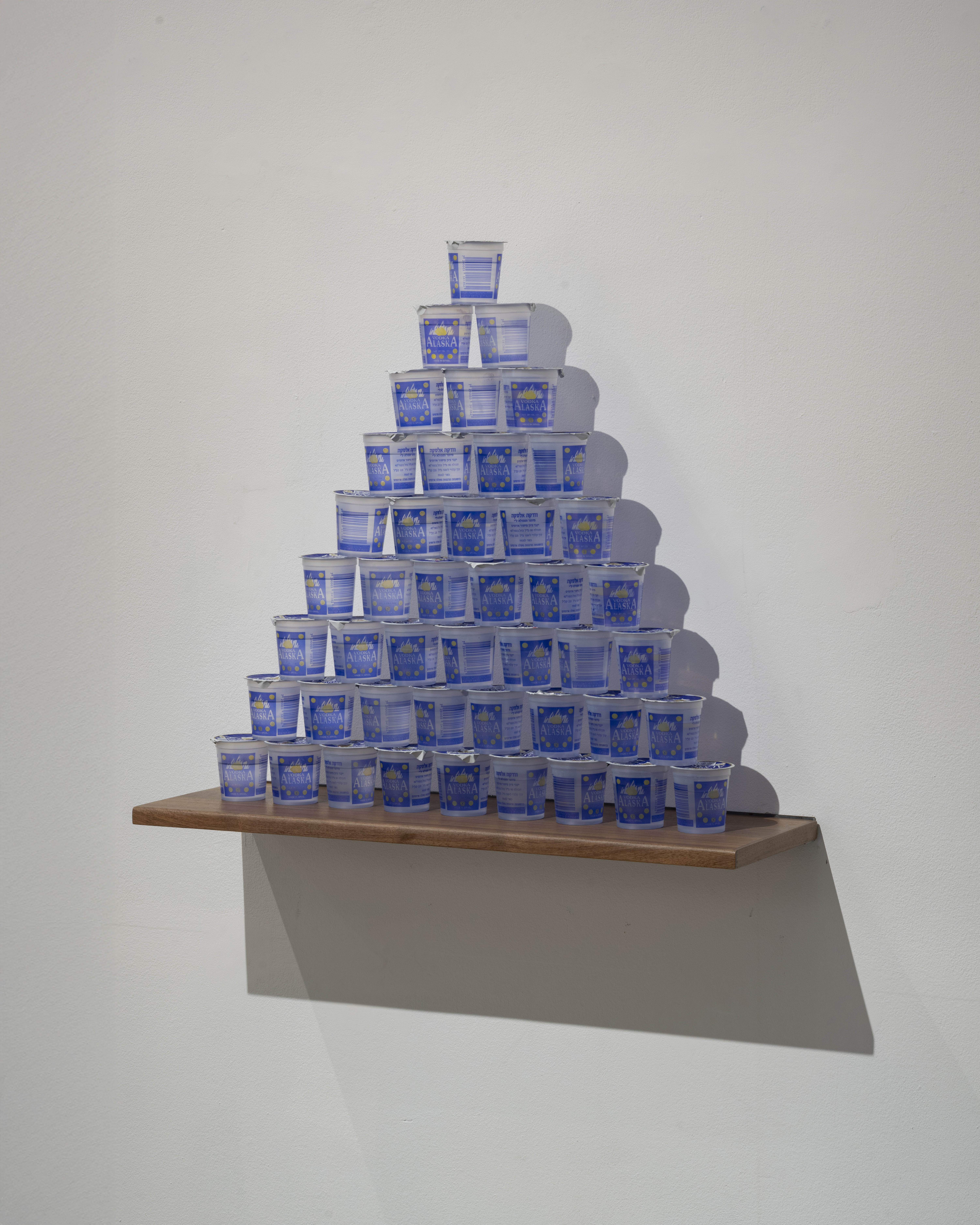
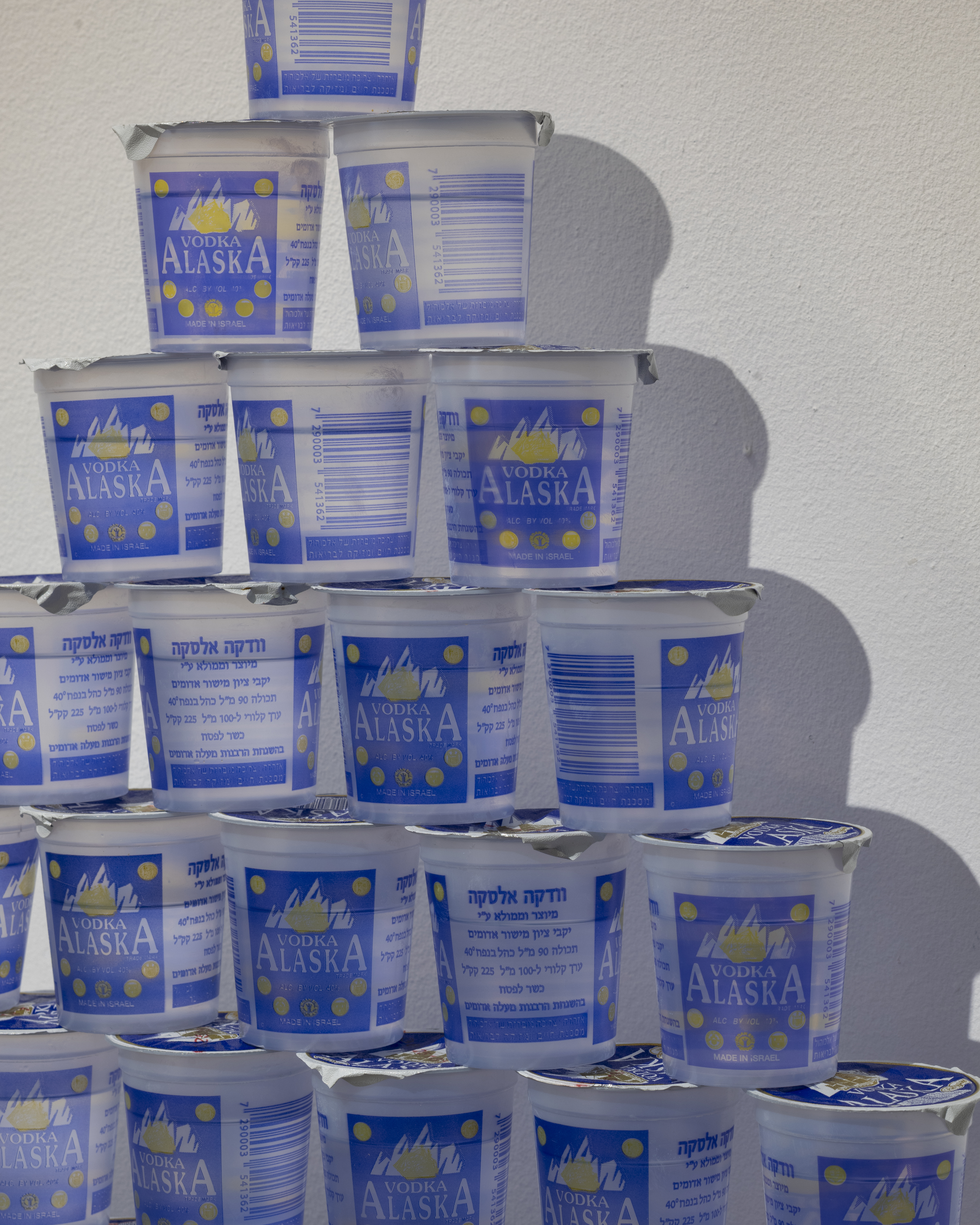
Forty five plastic cups of “Alaska” vodka are stacked into a stable yet fragile pyramidal structure, a kind of temporary monument to the cheapest and most accessible substance on the margins. The vodka, produced in Mishor Adumim and sold in corner shops, marks a charged encounter between local economy, low-cost production, and the appearance of luxury.
The work examines the gap between the name “Alaska,” an image of distance, purity, and escapism, and a reality of poverty, dependence, and everyday consumption. The stack, echoing towers, temples, or pyramids of success, functions as an inverted symbol: a precarious structure built from a temporary material that stands only as long as no one touches it.
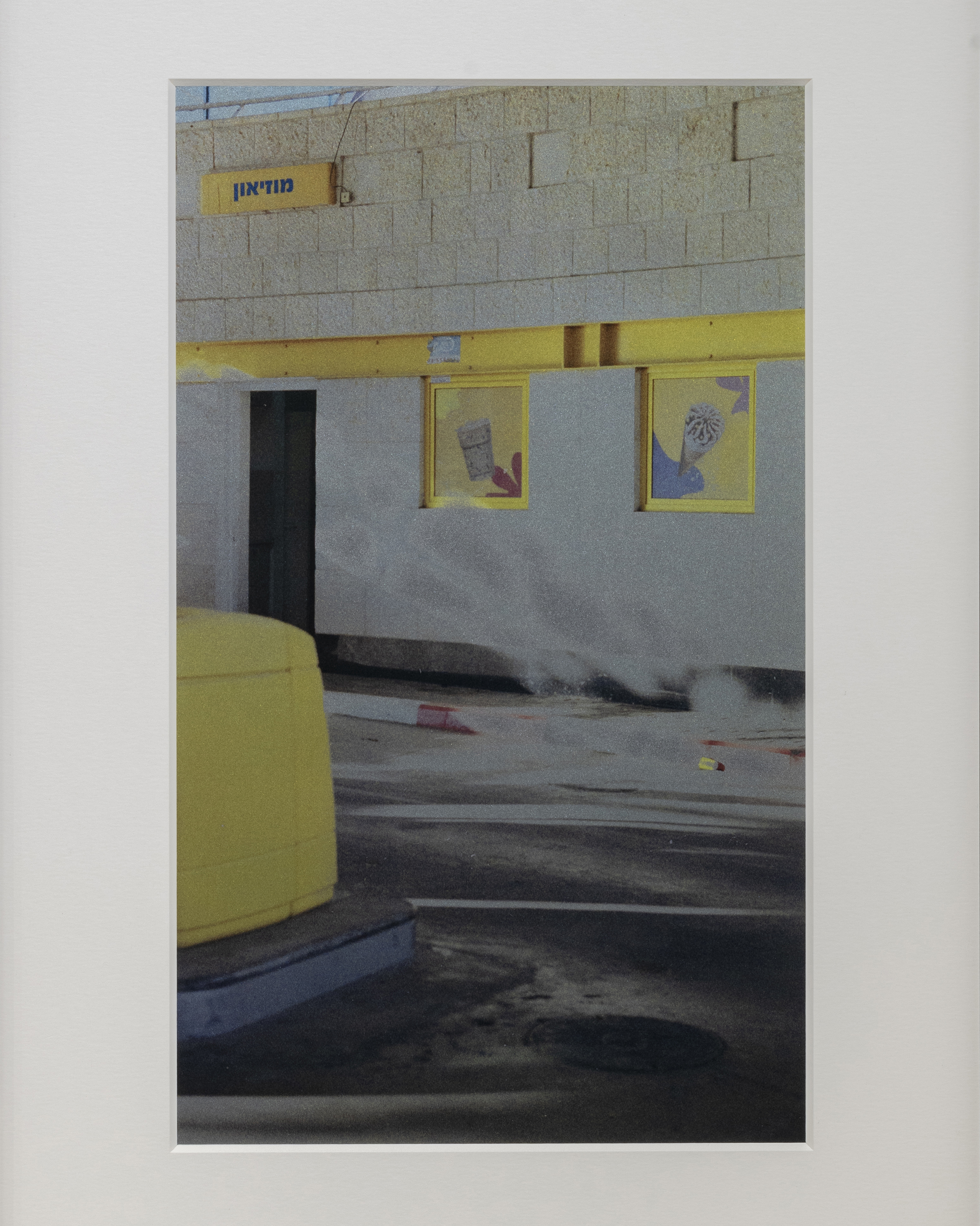 Museum, 2025
Digital print on silver paper, 70 × 40 cm
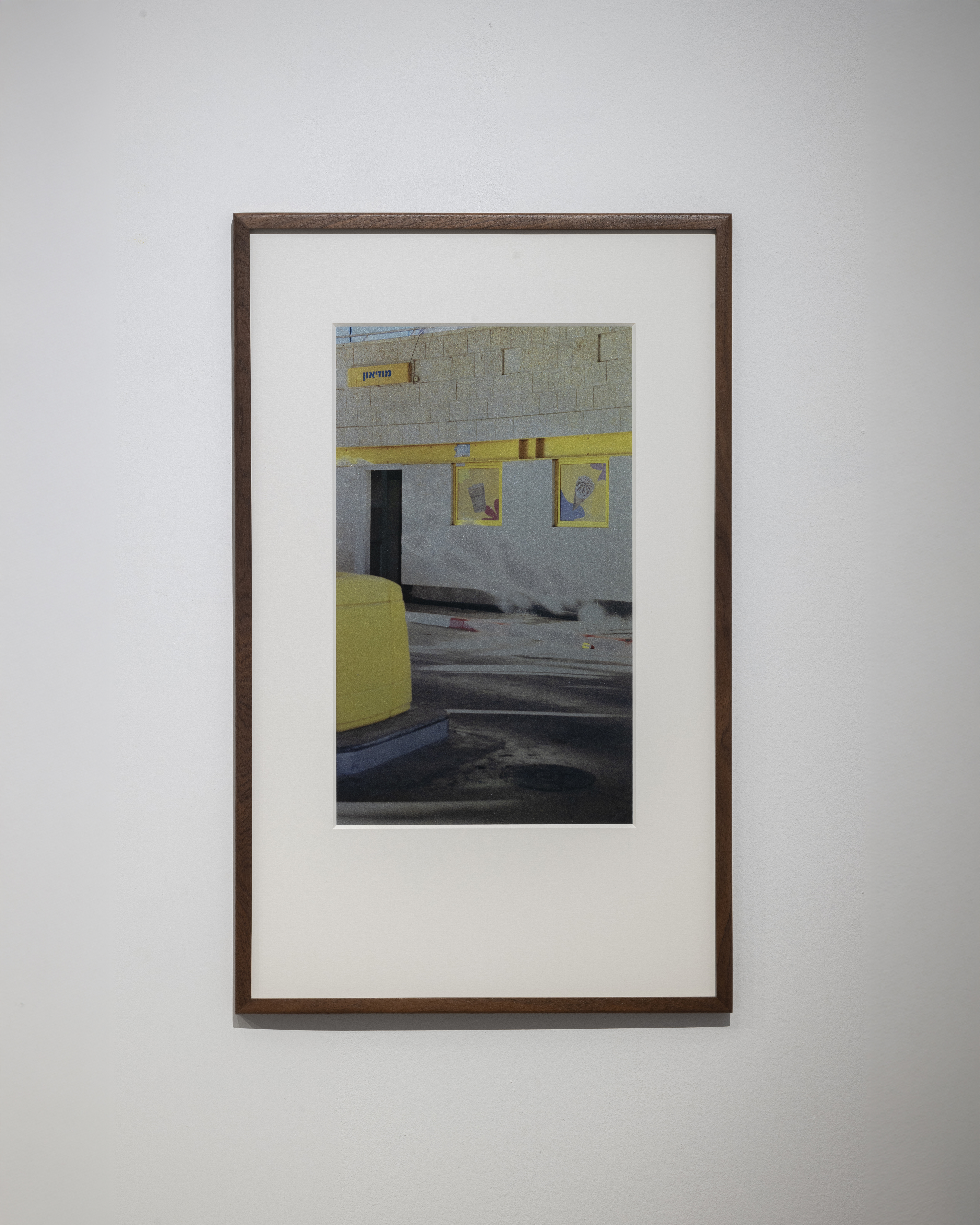
“Museum” is a photograph of gas stations located near the Israel Museum, printed on reflective silver paper. The choice of the shimmering material gives the image an almost collectible appearance, like a rare parchment, and shifts attention away from the everyday landscape toward the ways in which images
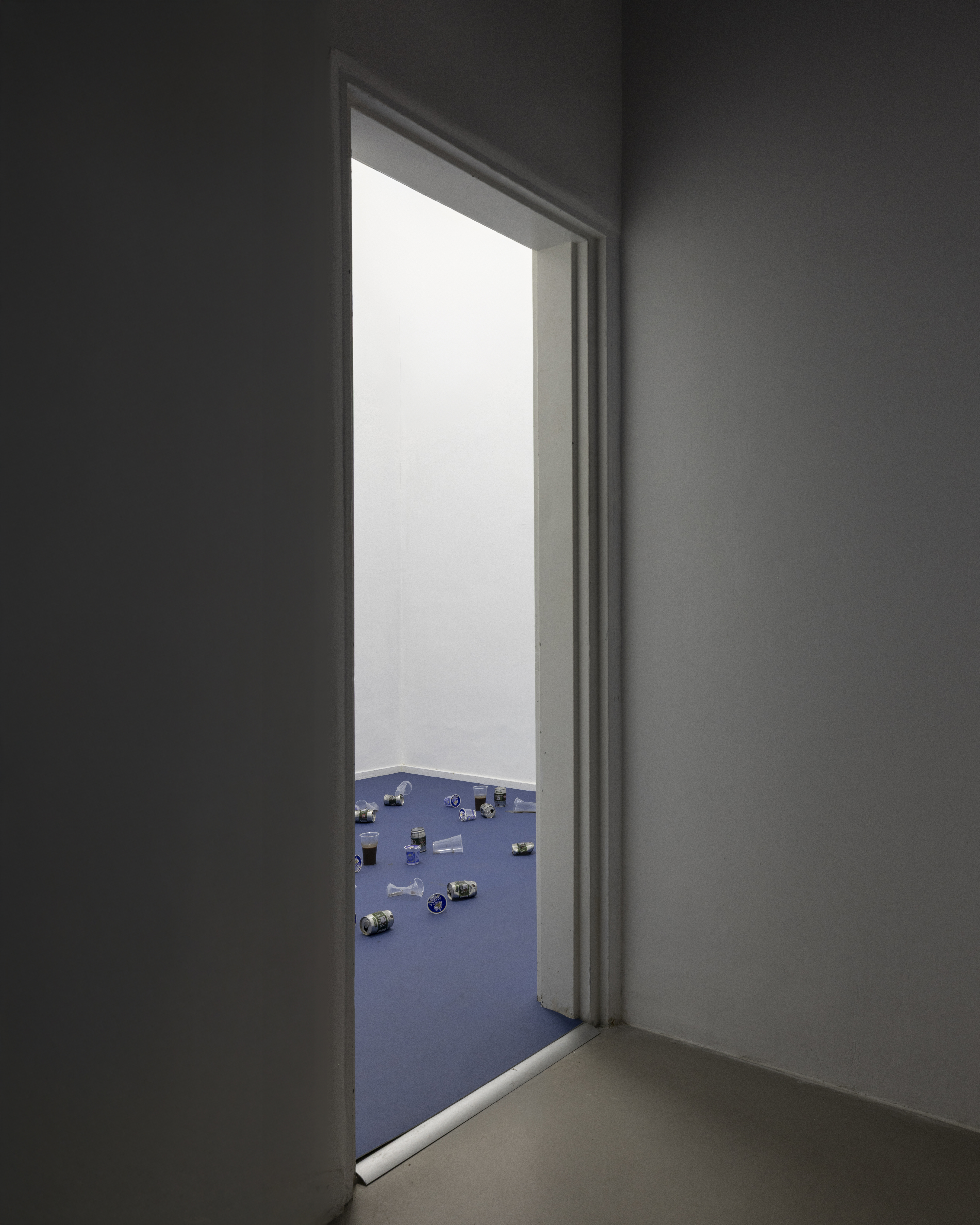
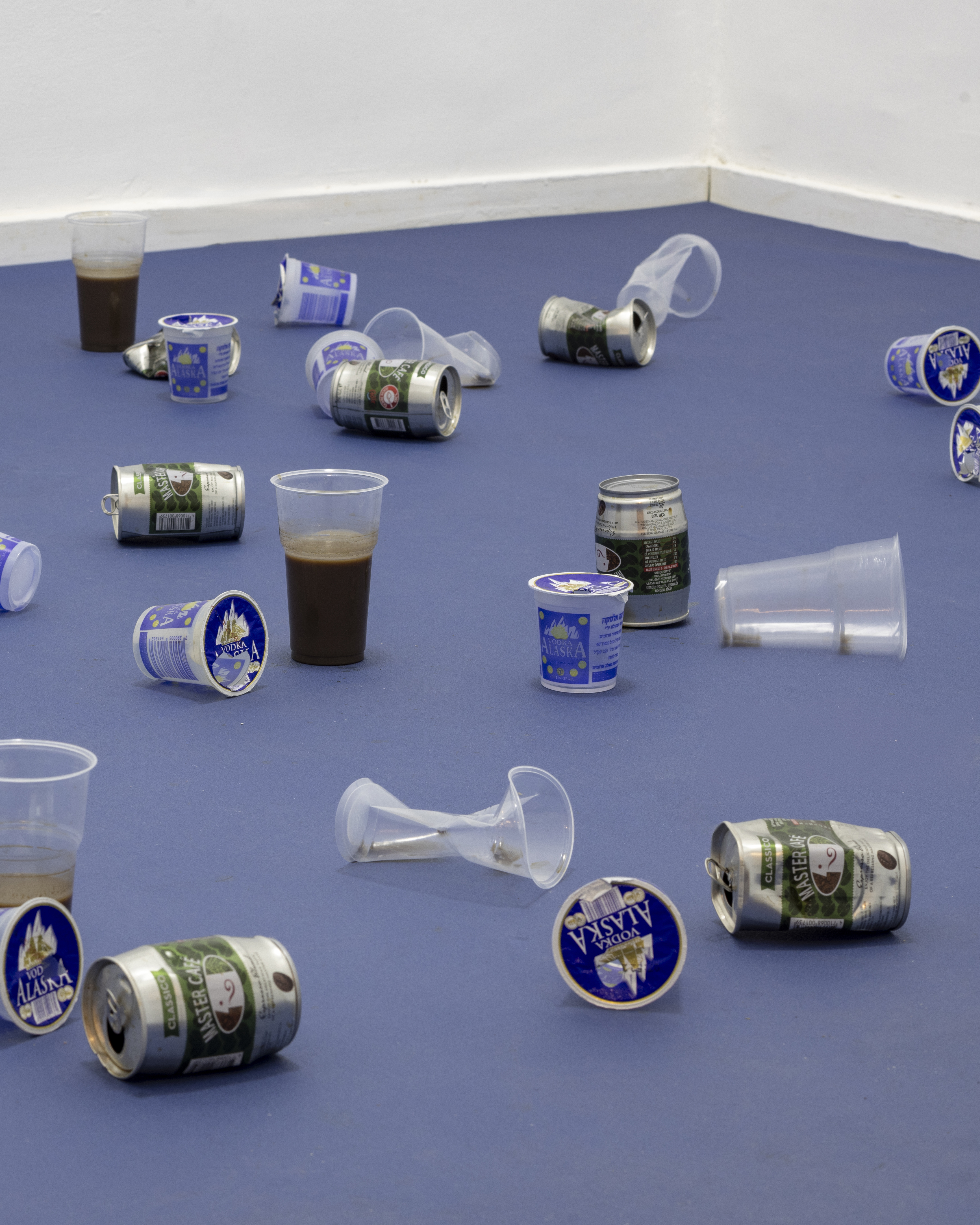
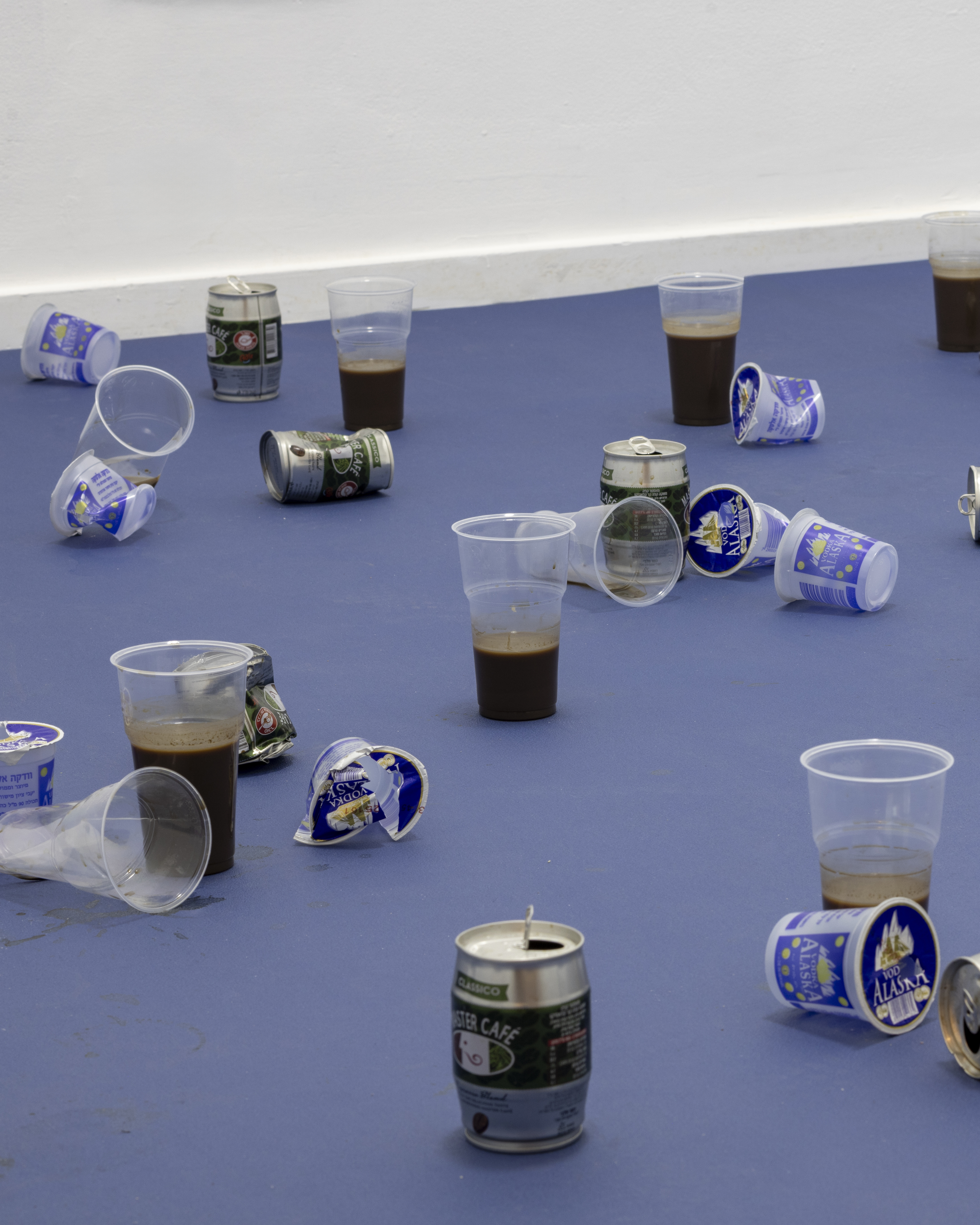
 Espresso Martini, 2025
Alaska vodka cups, Master Café cans, plastic cups, linoleum
Plastic cups of “Alaska” vodka and “Master Café” cans scattered across a blue linoleum floor a reflection on the gap between image and reality, between fantasy and the urban everyday of exhaustion, survival, and an imagined sense of style.